

For Gen Z, travel is not just an alternative to routine but an extension of their way of being: fluid, personalised, connected. It is in this change of perspective that an increasingly important part of the tourism industry is being redesigned, called upon to
deal with a generation that does not just consume experiences but co-designs and recounts them.
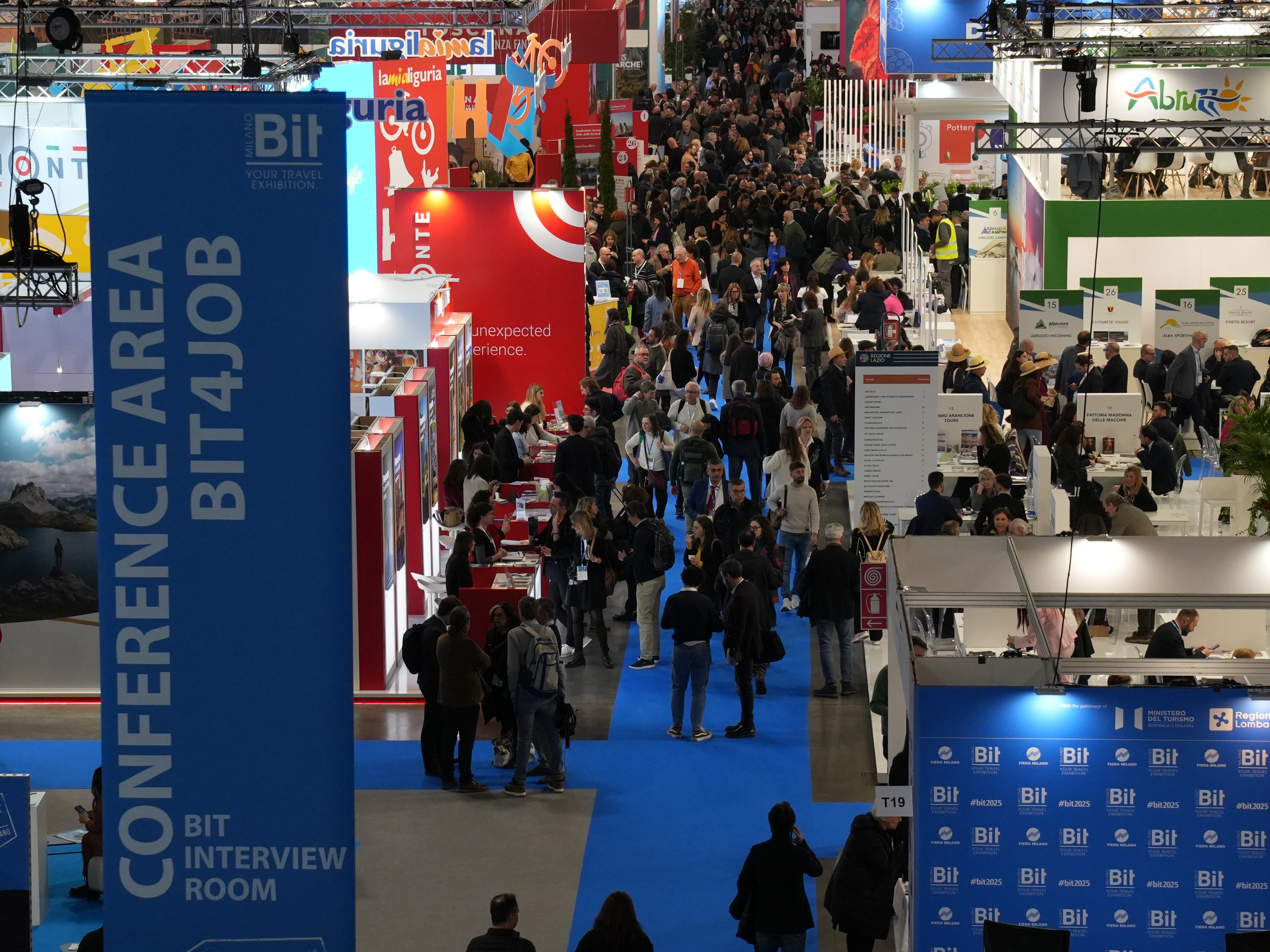
‘This evolution will be discussed at BIT 2026 (Rho-Fiera Milano from Tuesday 10 to Thursday 12 February 2026), where the generational focus becomes a cross-cutting key to understanding how demand, supply and relationship models in tourism are changing,’ explains a press release.
Young people and tourism: living or surviving? It addresses the issue of work and the attractiveness of the sector for the younger generations, questioning the conditions necessary to make tourism a space for growth and not just precariousness. When it comes to Gen Z, one of the most interesting trends affecting them is the rediscovery of organised tourism. Another point related to this generation is emerging markets such as China. In 2026, Generation Z will continue to be one of the most influential and dynamic segments of the global tourism market. According to Morning Consult Pro, 52% of young adults fall into the “frequent traveller” category, having taken at least three leisure trips in the last year, despite an economic climate marked by uncertainty and rising costs. Their choices are driven by a strong propensity to use technology: 72% say they regularly use artificial intelligence tools to plan trips, create tailor-made itineraries and compare prices in real time, as highlighted in the Skyscanner Travel Trends Report 2026.
Inspiration increasingly comes from visual content: over 50% of young people use social media as their main tool for discovering destinations, while 81% of Gen Z and Millennial travellers plan their holidays based on locations seen in films or TV series (Expedia Group Unpack 2026), confirming the growing importance of set-jetting.
Wellness travel. In terms of behaviour, there is a strong focus on well-being: 77% prefer healthy holidays, for example without alcohol consumption, as reported by StudentUniverse in collaboration with Condé Nast Traveler. Europe stands out for its growing spending power on international travel and greater openness to alternative models: according to Skyscanner 2026 data, 33% of young Europeans say they prefer organised group trips, while 69% say they are willing to choose lesser-known destinations to avoid overtourism.
In Italy, this trend translates into an increasingly personalised demand: 81% of young travellers seek tailor-made itineraries, often through digital tools, as indicated by the analysis of tourism and generational behaviour contained in the base document.
Gen Z and digital. In 2026, digital is no longer a channel but the very infrastructure of travel. Social media has replaced traditional search engines as a starting point for inspiration: short videos and authentic content guide choices more than text reviews. Booking is seamless, directly from the platforms, shortening the path between desire and purchase. Generative artificial intelligence has established itself as a personal travel planner, enabling an unprecedented level of hyper-personalisation. Travel must be mobile-only, paperless and seamless: digital documents, smart keys, electronic wallets and flexible payment options are becoming prerequisites. At the same time, digital technology is a tool for avoiding overtourism, identifying alternative destinations and facilitating a more authentic connection with local areas. Finally, connectivity enables new lifestyles: workations (stays that combine work and holidays) and digital nomadism make Wi-Fi quality and co-working spaces primary criteria for choice, merging work, leisure and travel into a single continuous experience. For more information, visit bit.fieramilano.it - IG @bitmilano