

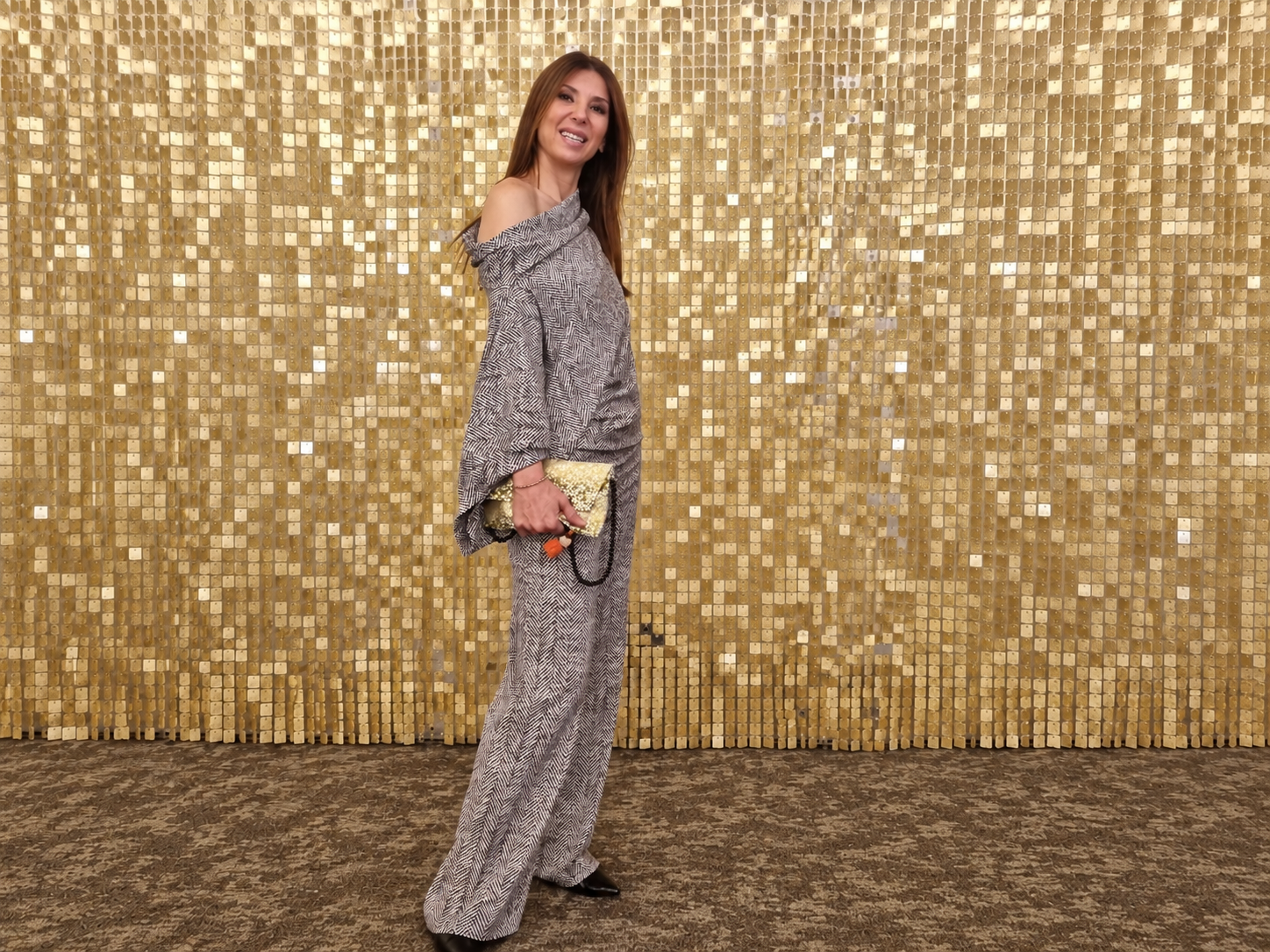
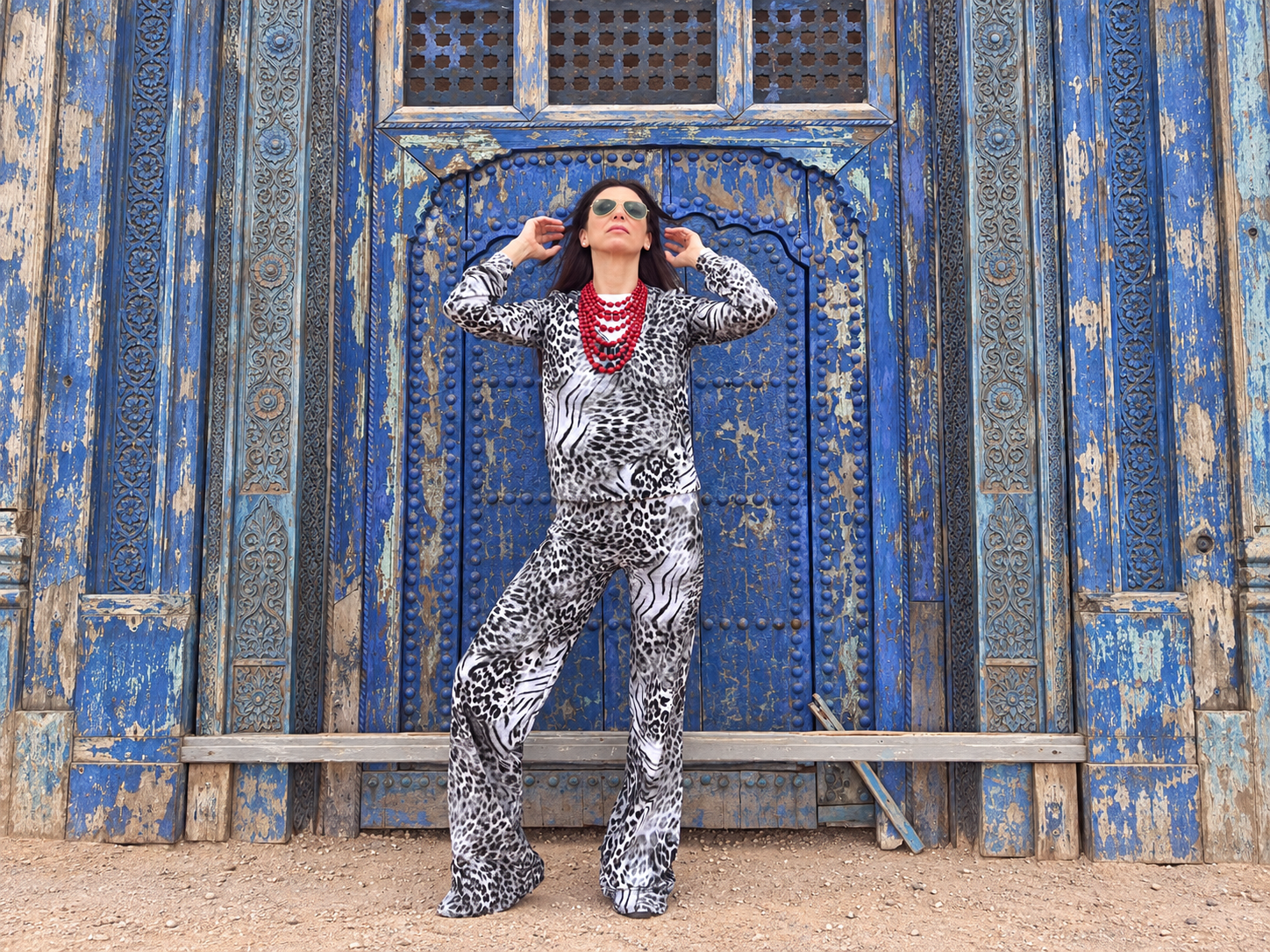
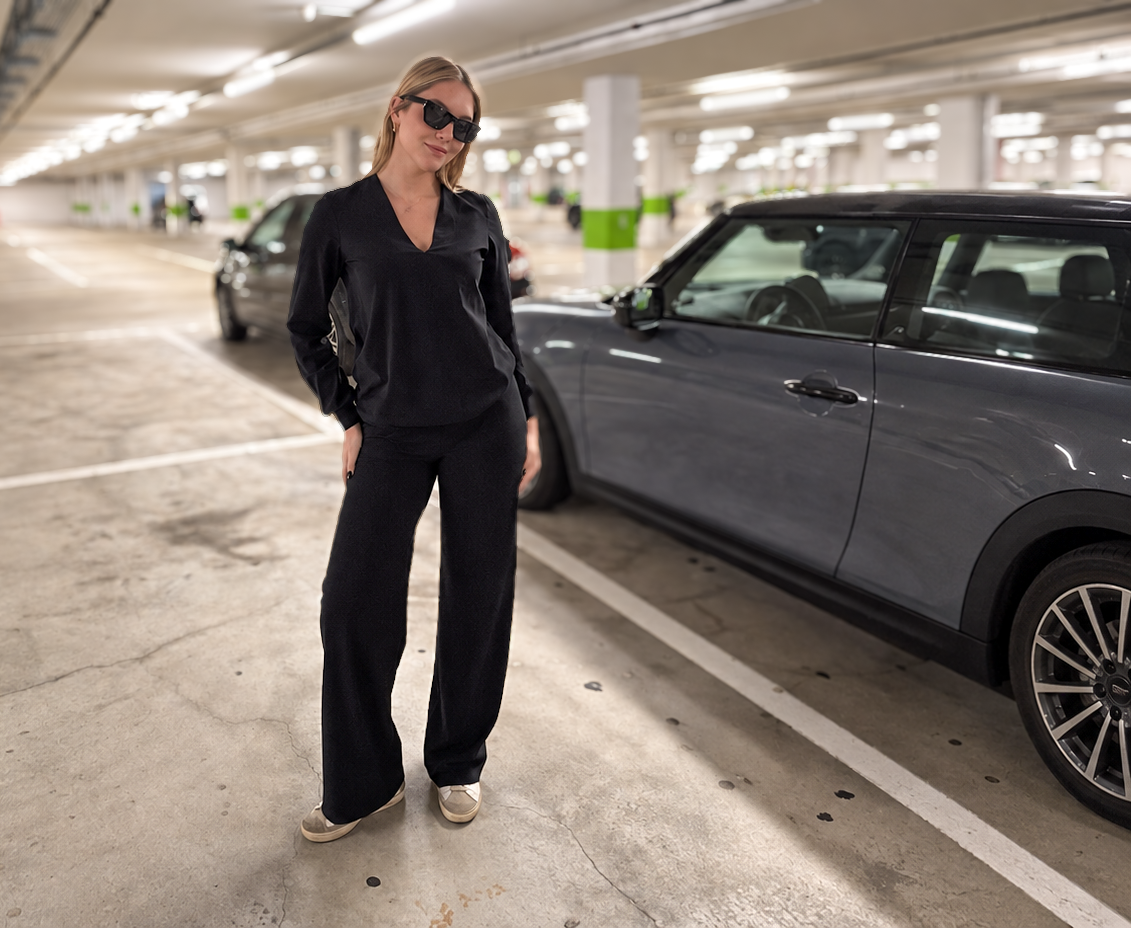
Valeria Damato, entrepreneur and fashion designer, is a determined woman with a passion for beauty and the value of fine craftsmanship. For some time now, she has been expanding the brand that bears her name. We know her for her colourful swimwear, rich in precious details; for her famous jumpsuit, practical yet undeniably elegant; and for her business philosophy: creating one-of-a-kind pieces, such as the swimsuits in the Valeria Damato Beachwear collection. The exceptional craftsmanship of the embroidery and the quality of the raw materials make these creations highly sought-after and intended for a select clientele. “We all feel special when we wear something that has been conceived and created exclusively for us”, she tells us in an exclusive interview, in which she reveals some of her secrets. "In 2012, I began asking myself what I could do best, what truly represented me and, above all, what could express my love for Italian tradition. I had learned the art of pearl embroidery from my mother. I had watched her embroider my sister’s wedding dress, and I, too, wanted to be able to create that magic which, through patience and determination, emerged day after day from her hands. So I began embroidering my own swimsuits. Even today, I can proudly say that my family is my greatest wealth, the very essence of my concept of luxury”, the designer explains.
What is the true value of a luxury product today: quality, creativity, exclusivity or experience?
Without a doubt, exclusivity, because it is the one ingredient that inevitably encompasses the other three. An exclusive product cannot exist without craftsmanship and quality, especially when it is made in Italy. Genuine Made in Italy production takes time, and high-level craftsmanship can only yield a limited number of creations.
How have the expectations of luxury consumers changed, and how are younger generations approaching luxury differently?
Young people, who have been swept up in the fast-fashion phenomenon, have finally discovered the value of authentic Made in Italy products, created by great Italian—and even French—tailors, through vintage pieces, often found in their grandmothers’ wardrobes. This is helping them move beyond the superficial concept of a “brand”. They have discovered how a garment featuring a tailored cut, handmade craftsmanship, the rare skills and meticulous care of our tailors, and the uniqueness of a one-of-a-kind piece can make them feel truly special.
What differences do you see among customers in different international markets? And, above all, which markets are worth investing in?
Foreign customers perhaps appreciate Made in Italy even more than we do. My international clients—from the United States to South Africa, from Russia in the past to the United Arab Emirates and many European countries—love my creations equally. There are no preferences based on where they come from, only a shared love of beauty.
When I create, I never think about the country my client might come from. I think only about what can touch the eyes and soul of the person looking at my work.
At the moment, I am betting on my business in Italy, with the aim of bringing international customers here. I have become increasingly aware that the shopping experience is losing its appeal day by day, because today almost everything that is produced can be found in every corner of the world. Indeed, despite travelling extensively, I have almost lost the desire to shop for clothes in other cities, because I can find everything here in Milan, just a few steps from my home. With this awareness, I decided that my products would be available exclusively here in Milan, at my atelier and in other exclusive venues, such as luxury hotels and Relais & Châteaux properties, for which I continue to create exclusive pieces.
Could you tell us about your new Autumn/Winter collection?
The new collection was born as I immersed myself in books, photographs and films featuring Greta Garbo. It includes embroidered and non-embroidered faux-leather jumpsuits, pinstriped jumpsuits paired with kimonos, menswear-inspired shirts, leather arm warmers extending to the elbows, and embroidered cuffs and collars, which have always been among our signature products.
Is the jumpsuit still one of your signature pieces?
The jumpsuit is always present in my collections because it perfectly embodies my philosophy: when the body is free to move, the mind moves faster, too. Nothing offers the same freedom of movement as my jumpsuits, while remaining impeccable and refined for more than 24 hours. Moreover, twelve years after the first jumpsuit was created, clients are still asking for our two iconic designs, Giulia and Sabina, in new colours and patterns.
Are you planning any acquisitions or a possible stock market listing?
Although I always keep a close eye on the stock market, which is one of my greatest passions, I believe I still have a long way to go. Nevertheless, out of curiosity and as part of my professional development, I study fashion brands that have decided to go public, seeking to understand and learn from their strategies. This is how, with the help of my accountant, Gianluca Pontarelli, I learned to read and understand financial statements. At the same time, I closely follow luxury brands that have chosen not to go public, remaining under the ownership of their founding families, so that I can fully understand their motivations and values.
Can luxury help preserve traditional trades, skills and cultural heritage that are at risk of disappearing?
I believe it is the only way to do so, unless the labour costs that companies must bear—particularly in the craft sector—are transformed. A garment embroidered by hand using the finest raw materials inevitably costs a great deal to produce. Its cost can never be spread across a sufficiently large volume of products to bring the price down, because a creation of this kind is, by its very nature, produced in limited quantities.
Are you concerned about AI? What impact will artificial intelligence have on design, production and your relationship with customers?
I believe artificial intelligence will simplify various stages of both the production process and communication. However, there is a risk that customers may come to perceive a kind of artificial, plastic-like perfection that, by its very nature, falls outside the realm of human creativity. AI will undoubtedly bring about major changes in the labour market, and I do not believe this can be prevented. Perhaps we should anticipate these changes by adapting to new forms of work. But this has always happened throughout history. Many jobs from the past no longer exist today; they have evolved, transformed or disappeared altogether. Artificial intelligence will undoubtedly be able to create the impossible. But do you really believe it can convey that magic and greatness that only hands, mind and heart working together can bring to life? Deluxu.it Magazine