

The global branded residences sector, comprising residential properties associated with prestigious brands, continues to expand rapidly. In 2026, it will exceed the 1,000-project threshold for the first time, driven by the growth of high-net-worth individuals, increased international mobility and demand for homes that combine exclusive services, residential quality and lifestyle. This is according to Knight Frank’s latest Residence Report. The study identified nearly 1,800 properties, either already operational or under development, associated with more than 200 brands across 90 countries. In just ten years, the sector has almost tripled in size, growing from 354 developments in 2015 to 903 at the end of 2025. Based on projects currently in the pipeline, the sector could reach 1,800 developments and more than 300,000 residential units by 2031. The expansion of luxury branded residences is not just a matter of numbers. The services, amenities and residential models introduced by these concepts are helping to establish new standards for the international residential market, also influencing property developments that are not directly affiliated with a brand. The United States remains home to the largest concentration of established residential brands, but the Middle East has emerged as the sector’s main growth engine, accounting for 20% of all operational branded residences and 29% of development projects worldwide. Dubai remains the world’s leading city, with 175 branded residences, while Abu Dhabi and Ras Al Khaimah are attracting an increasing share of new investment in this segment. However, the current political situation could affect the timing and launch strategies of some properties brought to market for sale. Among the world’s ten leading destinations, the most significant increases have been recorded in Al Marjan Island (+45%), Phuket (+40%) and Abu Dhabi (+37%). One of the most notable changes is the sector’s gradual expansion beyond major cities. In 2016, fewer than four in ten branded residences were located outside urban areas. Today, this category accounts for more than half of the total and, based on announced openings, is expected to reach 57% by 2028. More than half of new developments are located in coastal destinations, on islands, in mountain areas and in tourist resorts. Including properties currently under development, Phuket now has more branded residences than London. The market is also becoming increasingly diversified. Hotel brands account for approximately 70% of currently operational properties, but their share falls to 60% when developments still under construction or in the planning stage are included. Meanwhile, the share of non-hotel brands and brands associated with other industries is expected to rise from around 30% in 2025 to nearly 40% by 2028. Fashion houses, automotive brands and lifestyle companies are entering the sector, broadening the market offering and expanding the range of choices available to buyers. Growing international mobility is also supporting demand. In 2026, the number of international flights is expected to reach 13.2 million, exceeding pre-pandemic levels and representing an increase of almost 19% compared with 2023. In Europe, the fastest growth is concentrated in destinations where tax regimes and visa policies have a particularly strong appeal. Monaco leads the rankings with an increase of 407%, while other expanding markets include Malta, Athens and Milan. Greater mobility is also fuelling demand for second, third and fourth homes. In less than ten years, the average property portfolio of ultra-high-net-worth individuals (UHNWIs) has grown from 2.9 to 3.8 properties. Demand is further supported by the global increase in high-net-worth wealth. Over the past five years, the United States has accounted for 41% of newly created UHNWIs, while India and Vietnam are emerging as increasingly important markets for the sector. www.knightfrank.com
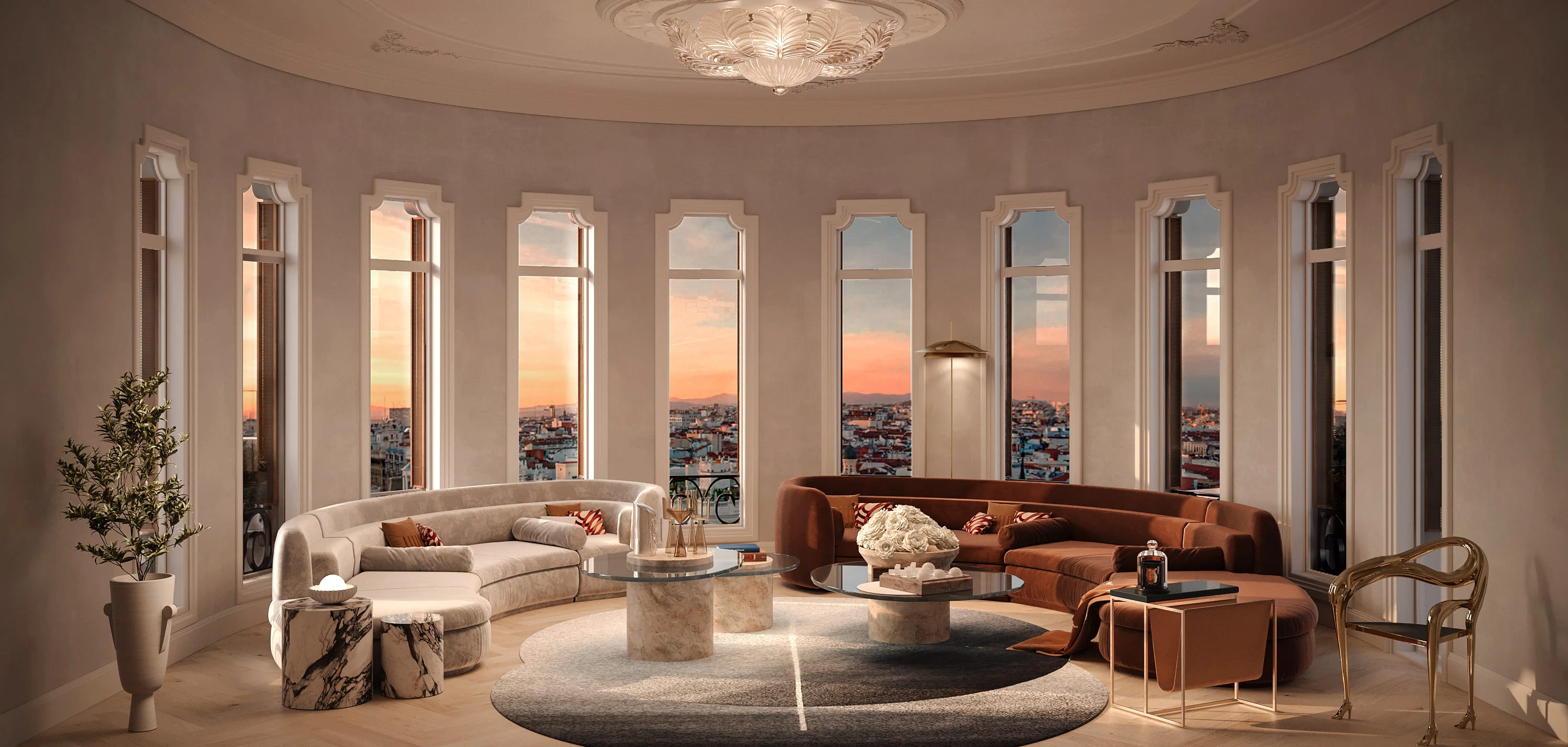
Madrid Photo by Knight Frank, copyright
Report by Knight Frank
Luxury Residences: Phuket Overtakes London